Showing posts with label students. Show all posts

Tuesday, December 9, 2014

Study Tips: Productive Cramming


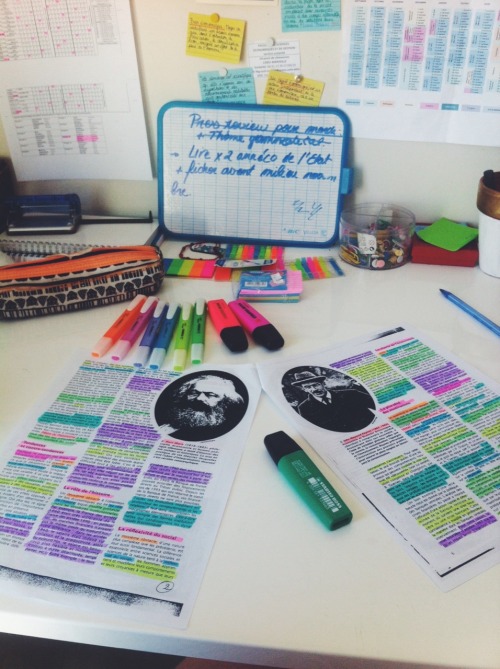
Cramming is frowned upon, but at the eleventh hour, there aren't many other choices you can make. Hopefully, you have a basic understanding of 2 things: the objectives of the course and how you professor likes to assess your knowledge.  From an educator's perspective, we want to know that our students have reasonably accomplished the objectives set forth in the syllabus as demonstrated by mastery in basic concepts in the subject. In order to effectively cram for your exams, you'll need your syllabus, notes and study guides (borrow good ones if yours are terrible),  highlighters (a different color for each objective), textbook (if your course has one), paper, pen, and a Starbucks latte.

1.  Locate the objectives on your syllabus and highlight each in a different color. For example:

Objectives:
  • To learn the prevailing points of view about creativity and its origins.  
  • To gain a better understanding of the writing process.
  • To understand how some writers go through the creative process.
  • To constructively analyze  and critique the work of other writers.
  • To understand and apply literary composition techniques

2.  Using the highlighting color scheme you've established, highlight notes and study guides that address the objectives. For example, highlight all "prevailing points of view" in yellow and anything related to the "writing process" in orange.


3.  If your professor did not give you a study guide or if you are like me and need to see one subject on one sheet, make subject sheets using the same color scheme. For example, scribble purple highlighter at the top of a blank sheet of paper. You know that purple means "literary composition techniques."  From your notes, list the techniques you've highlighted purple already and add brief descriptions from the notes. You may need to look them up in your textbook if your notes are not clear.



4.  Guess what? You've been studying the whole while you've been setting up your color code! Take a sip of your latte and plow forward. You can put your syllabus aside for now. Take a look at one color subject sheet.  Determine which items you "have mastered," "are familiar with," or "clueless about."  If you've mastered it, draw ☺. If you're familiar with the item, draw a star. If you are clueless about an item, draw a ☹.

5. Time to review! You will focus on the items you starred for about an hour. You will focus on the smiley items for 30 minutes. Then sleep! (or set up your study notes for another class).

6. The day of your exam, preferably one hour before the exam, run through your frowny items just to gain some familiarity with them. Look through notes and the text book for these concepts.  Those items will be in your short-term memory, so when you take the exam, seek those items out first with hopes that you can recall that information that you just quickly stored.


7. After the exam, it is essential that you debrief. Take a look at your subject sheets and check off the areas that you feel you aced. Put question marks next to the items you weren't sure about.  This will be especially helpful if this course was a prerequisite for another you'll take next semester. You will be able to reinforce what you did not quite get during this semester.

Ideally, you would use these tips all semester long, but if you can set aside 3 hours, you will be able to complete this list and perform better on your finals. It's not all about grades, but sometimes it feels like it is!

Questions? Comment me or hit me up on Twitter @akagia.

Break has begun!! Get to the fun!!


Monday, September 29, 2014

Education Tidbits: Save Time And Money With Dual Enrollment Programs


With soaring education costs, it is good to know that there are ways to save money.  Dual enrollment programs around the country afford mostly high school juniors and seniors the opportunity to take college courses that count toward graduation and as college credit. “Hitting two birds with one stone” if I’ve ever heard of it!  Most programs around the country are at no cost to the families, and still others have a waiver for low income students.  In some states, the cost is paid by the parents.  Yet, if looked upon objectively no matter where the cost burden lies, families will still save money and time to boot.  

Since students are working toward completing general studies during their senior year, they enter college as a sophomore.  That is one less year that families would have to pay full tuition of a 4-year institution. Programs like the one in Virginia put students on track toward earning a General Education Certificate by the end of their high school senior year. Upon graduating from high school with their General Education Certificate, students are able to transition to community college as sophomores. Earning an associate’s degree from a community college positions the students for eligibility for Guaranteed Admission at Virginia colleges and universities.

Programs such as dual enrollment, ensure that students will complete their college education early or on time, which strengthens the workforce and in turn the economy.  Check your state department of education website for more information about your state’s local programs.

Wednesday, September 24, 2014

How to Help Kids Find Their Passion

Amazon
Goodreads
Note: I'm going to clear out some time to read Flow in the coming weeks as well as some of his other books found here.  I am so excited about this I'm doing a happy dance right now! Creativity is almost as important to me as my heartbeat.


We should know our children better than anyone else, but it seems that the craziness of life often gets in the way.  I make it my point to study my child. I want him to avoid wasting his time pursuing things that really don’t suit him.  Let's use sports as an example.  He tried soccer at age four. He loved it the first year, but each season became less and less enjoyable for him. He “retired” from the sport when he was six years old. He was an excellent soccer player with skills and stamina, but he didn’t like it. So, the following spring, he tried lacrosse and loved it. Then in the fall, he found his “flow” with football. He is an overall excellent athlete no matter the sport, but football is where his passions lie.  Had I made him stay with soccer, I would have missed the opportunity to witness his football abilities and joy playing the sport.  He’s even interested in playing football in the spring which means that lacrosse and his $300 dollars’ worth of equipment will take a back seat for now.  He assured me that he'll pick it back up when he's in middle school.


Another area where he is in his flow is while he is drawing and sculpting.  He sits for hours drawing, but will only play a video game for the requisite 15 minutes.  The average attention span is 15 minutes, but when we are in our flow, "time doesn’t exist." What activities does your child do for long periods of time?  Don’t say watch TV! We all are guilty of that one.  There are some other activities in which your child becomes enthralled. Take note. That activity just may be the thing that will make him millions while fulfilled and possibly blessing others.  I’ve posted a TED talk about flow. Mihaly Csikszentmihalyi: Flow, The Secret to Happiness. The video is also found here.


I related to the speaker more than I could have ever imagined. When I’m writing, time doesn’t exist. I will sit down to write and the next thing I know it’s 3 hours later. If I don’t write, I miss my characters. I wonder what they’re up to.  Anyway, once you notice your child’s “flow” activity, give them opportunities to hone their skills.  Give them the tools they need to experience this wonderful space. I signed my son up for two art camps this summer, and of course we are in the middle of football season right now. I signed him up for a speed and agility afterschool activity this fall as well. There are always a plethora of art supplies available to him.

I think back to when I was eight years old deciding my future by stating that I wanted to be a pediatrician based on an interview I conducted with my pediatrician. I couldn’t stand the sight of mucus or blood, but I was going to be a doctor. I sat in my room for hours designing clothes and hairstyles, but doctor was my career choice.  I took photographs and won awards for my photography, but doctor it was.  I wrote and illustrated books and won awards for them, but there was no turning back from a declaration I made when I was a mere eight years old.  O, had my parents and I known about flow back then.  I would be a fashion journalist. But, it’s never too late, and the fact that I’ve been through twists and turns with my career, makes me all the better suited to help students make wise decisions about their career track.  Let's study our children, witness when they're in flow, and help them hone those skills. Simple, right?  Help them intermingle the practical with their passions and success is inevitable!