

 Posts
Posts


Cramming is frowned upon, but at the eleventh hour, there aren't many other choices you can make. Hopefully, you have a basic understanding of 2 things: the objectives of the course and how you professor likes to assess your knowledge. From an educator's perspective, we want to know that our students have reasonably accomplished the objectives set forth in the syllabus as demonstrated by mastery in basic concepts in the subject. In order to effectively cram for your exams, you'll need your syllabus, notes and study guides (borrow good ones if yours are terrible), highlighters (a different color for each objective), textbook (if your course has one), paper, pen, and a Starbucks latte.
1. Locate the objectives on your syllabus and highlight each in a different color. For example:
- To learn the prevailing points of view about creativity and its origins.
- To gain a better understanding of the writing process.
- To understand how some writers go through the creative process.
- To constructively analyze and critique the work of other writers.
- To understand and apply literary composition techniques.
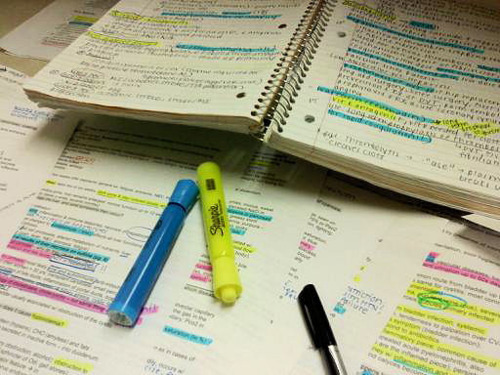
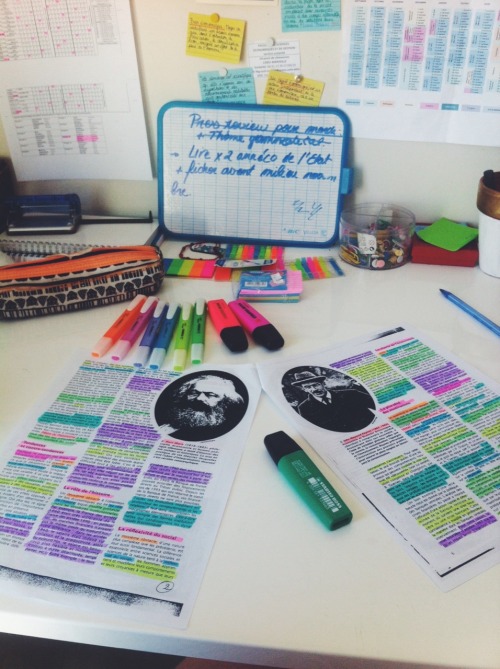
3. If your professor did not give you a study guide or if you are like me and need to see one subject on one sheet, make subject sheets using the same color scheme. For example, scribble purple highlighter at the top of a blank sheet of paper. You know that purple means "literary composition techniques." From your notes, list the techniques you've highlighted purple already and add brief descriptions from the notes. You may need to look them up in your textbook if your notes are not clear.


4. Guess what? You've been studying the whole while you've been setting up your color code! Take a sip of your latte and plow forward. You can put your syllabus aside for now. Take a look at one color subject sheet. Determine which items you "have mastered," "are familiar with," or "clueless about." If you've mastered it, draw ☺. If you're familiar with the item, draw a star. If you are clueless about an item, draw a ☹.
5. Time to review! You will focus on the items you starred for about an hour. You will focus on the smiley items for 30 minutes. Then sleep! (or set up your study notes for another class).
6. The day of your exam, preferably one hour before the exam, run through your frowny items just to gain some familiarity with them. Look through notes and the text book for these concepts. Those items will be in your short-term memory, so when you take the exam, seek those items out first with hopes that you can recall that information that you just quickly stored.

7. After the exam, it is essential that you debrief. Take a look at your subject sheets and check off the areas that you feel you aced. Put question marks next to the items you weren't sure about. This will be especially helpful if this course was a prerequisite for another you'll take next semester. You will be able to reinforce what you did not quite get during this semester.
Ideally, you would use these tips all semester long, but if you can set aside 3 hours, you will be able to complete this list and perform better on your finals. It's not all about grades, but sometimes it feels like it is!
Questions? Comment me or hit me up on Twitter @akagia.

6. The day of your exam, preferably one hour before the exam, run through your frowny items just to gain some familiarity with them. Look through notes and the text book for these concepts. Those items will be in your short-term memory, so when you take the exam, seek those items out first with hopes that you can recall that information that you just quickly stored.
7. After the exam, it is essential that you debrief. Take a look at your subject sheets and check off the areas that you feel you aced. Put question marks next to the items you weren't sure about. This will be especially helpful if this course was a prerequisite for another you'll take next semester. You will be able to reinforce what you did not quite get during this semester.
Ideally, you would use these tips all semester long, but if you can set aside 3 hours, you will be able to complete this list and perform better on your finals. It's not all about grades, but sometimes it feels like it is!
Questions? Comment me or hit me up on Twitter @akagia.
Break has begun!! Get to the fun!!


